
发布日期:2026-03-23 Number of views:2
In the field of building ventilation and protection, rainproof louvers feature the dual functions of air conditioning and weather protection. Behind their simple structure lies sophisticated airflow logic. Core parameters including pressure drop, pressure loss and ventilation rate directly determine their performance. This article professionally analyzes their working principles and reveals our company’s rainproof louver system as well as the actual performance of our newly developed FYL75 rainproof louver.
The core of rainproof louvers is to achieve "ventilation without water seepage and rainproofing without poor air circulation". The key is to precisely control airflow and scientifically design three core parameters:
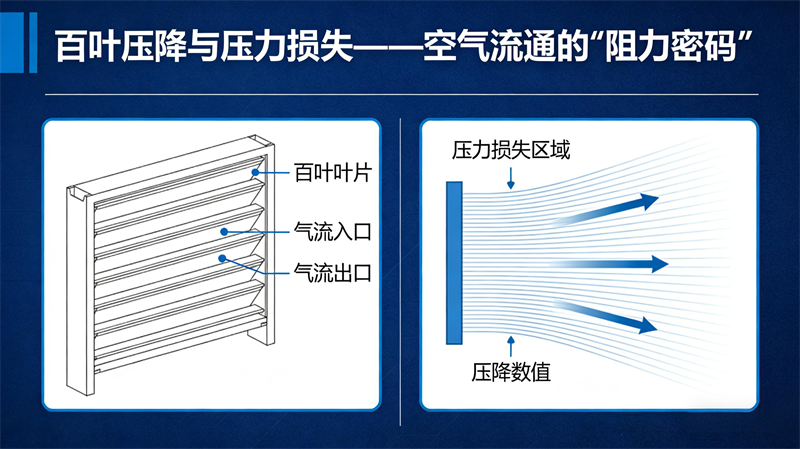
Pressure drop (also known as pressure loss) refers to the resistance air encounters when passing through louvers, which directly affects ventilation efficiency: excessive pressure drop reduces ventilation efficiency and generates noise, while insufficient pressure drop may cause rainwater to infiltrate with airflow.Pressure drop is related to blade configuration and louver depth. High-quality louvers require precise design to control pressure drop and balance ventilation and rainproofing, which is also the core focus of our R&D.
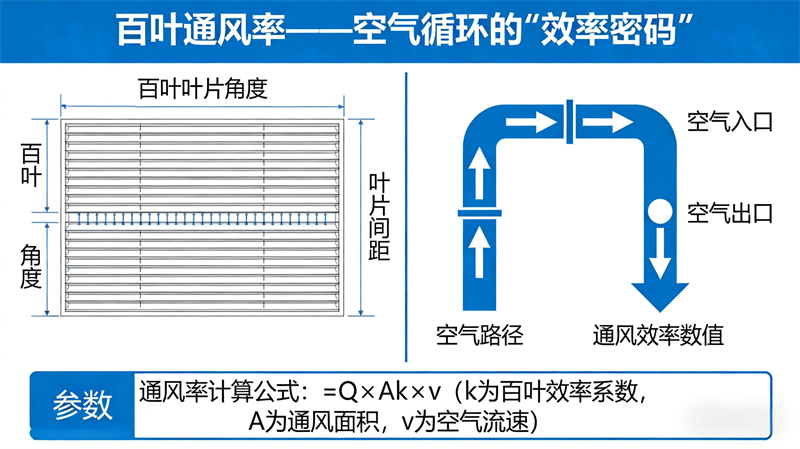
Ventilation rate is the core indicator for measuring ventilation performance, which is directly related to the ventilation area, blade spacing and angle of louvers. High-quality rainproof louvers shall have an effective ventilation rate of no less than 50%, otherwise they will lose their ventilation value.
Ventilation rate and rainproof performance are not contradictory. By optimizing blade angles (30°-45°) and spacing (8mm-15mm), sufficient ventilation and rainproof effect can be ensured at the same time, which is the essence of its airflow design.
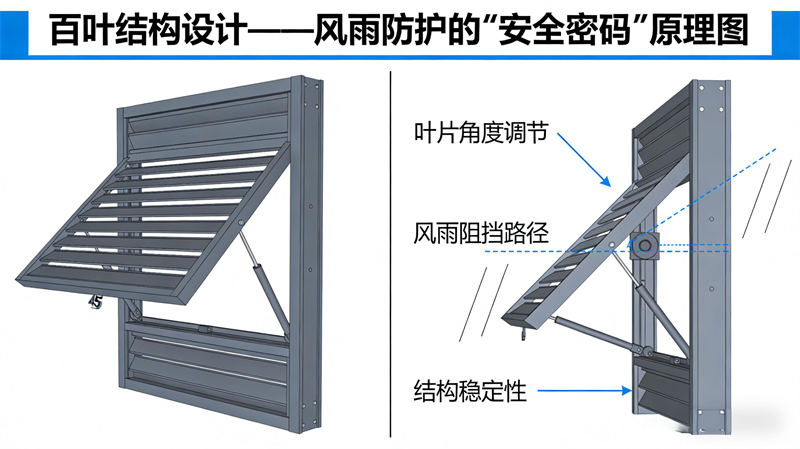
Pressure drop and ventilation rate are "soft indicators" of airflow, while structural design is the "hard support" for rainproofing. Qualified louvers must take into account blade structure, frame and sealing, and drainage system.
In addition, we optimize the configuration of insect-proof/bird-proof nets according to application scenarios to balance protection and ventilation effects and avoid additional pressure drop.
Recently, our newly developed FYL75 rainproof louver integrates the secrets of airflow into every detail. From design, R&D to production, it always focuses on "precise pressure drop control, improved ventilation efficiency and enhanced rainproof performance", perfectly balancing pressure drop, ventilation rate and rainproof performance, and becoming a core benchmark in our product system.
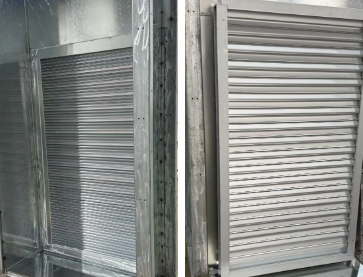
Product performance must be verified by actual tests. This test built a dynamic test platform in the factory to simulate real weather conditions, focusing on detecting rainproof effect and airflow characteristics under different wind speeds.
The test covers the full range from 1m/s (light breeze) to 5m/s (strong wind), including daily and sudden strong wind scenarios. Pressure drop, ventilation rate, water seepage and structural stability are monitored throughout the process to ensure the results are in line with reality.
The FYL75 achieves zero leakage and no water accumulation in the full wind speed range, fully meeting the standards. Its core advantages stem from precise control of airflow:
Pressure Drop Control: Optimized blade design delivers industry-leading pressure drop performance with a ventilation rate of no less than 50%, balancing ventilation and rainproofing.
Structural Optimization: High-strength aluminum alloy material with precise sealing and double-row blade design ensures stability without shaking under strong winds, eliminating leakage.
Detail Design: Streamlined water-collecting blades reduce pressure loss, improve rainproof efficiency and adapt to various building scenarios.
From principles to actual tests, from design to optimization, every detail of rainproof louvers reflects the ultimate pursuit of "balancing ventilation and rainproofing". With technology as the core and actual tests as support, we use the strength of FYL75 to build a solid ventilation and protection barrier for buildings.
In the future, we will continue to focus on R&D and optimize our product system to unlock more secrets of airflow. For more information, please contact our visit our website (www.ncc-acoustic.com). Providing more professional and reliable ventilation and protection solutions for various buildings is our eternal pursuit, and offering customized services and full-process support for customers is our consistent service commitment.
Telphone Number




administrators
No comment on this content